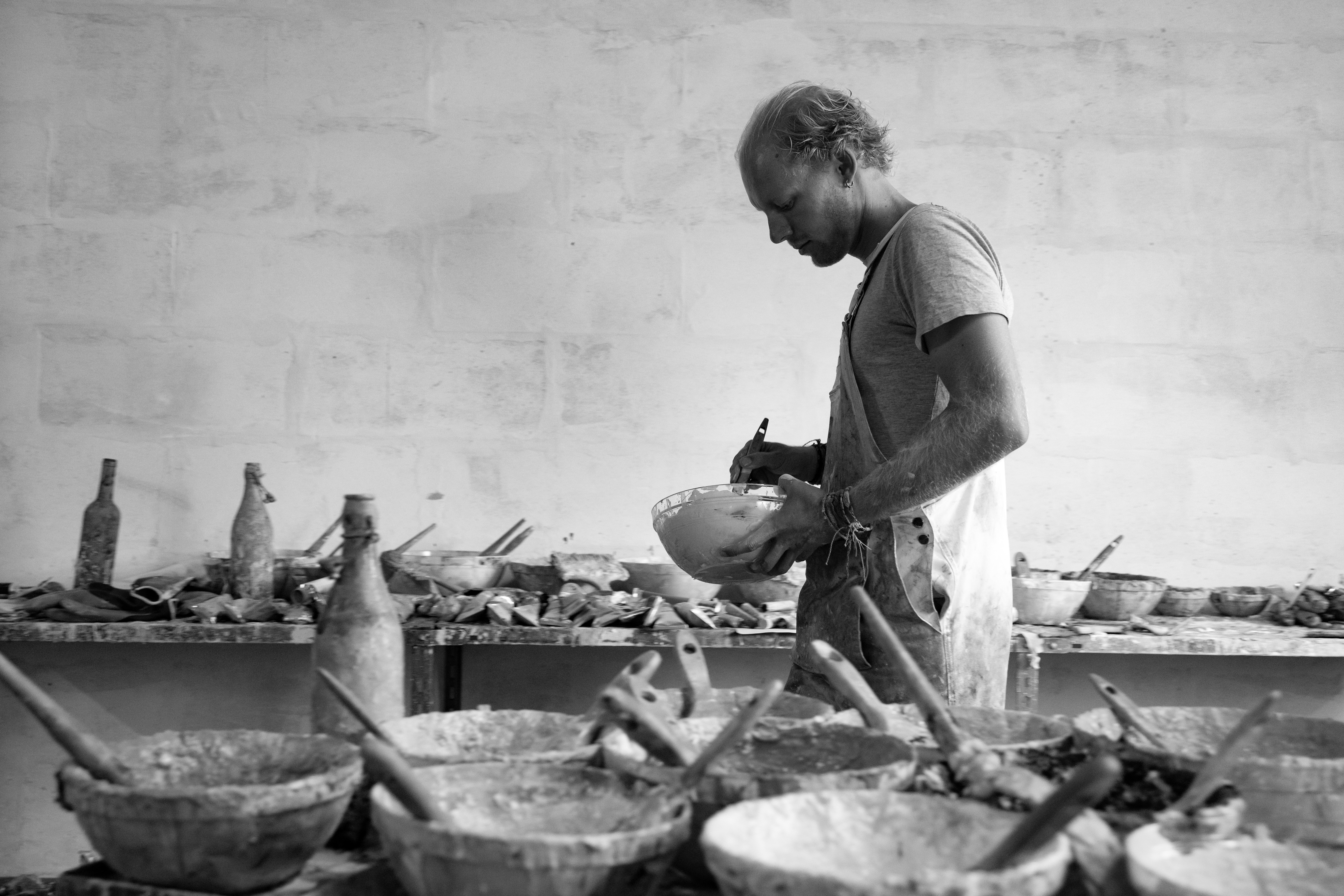
Website
gismari.com/ ↗Get the Issue
Issue III — Print ↗Gís Marí
Painter — Figueira da Foz, Portugal
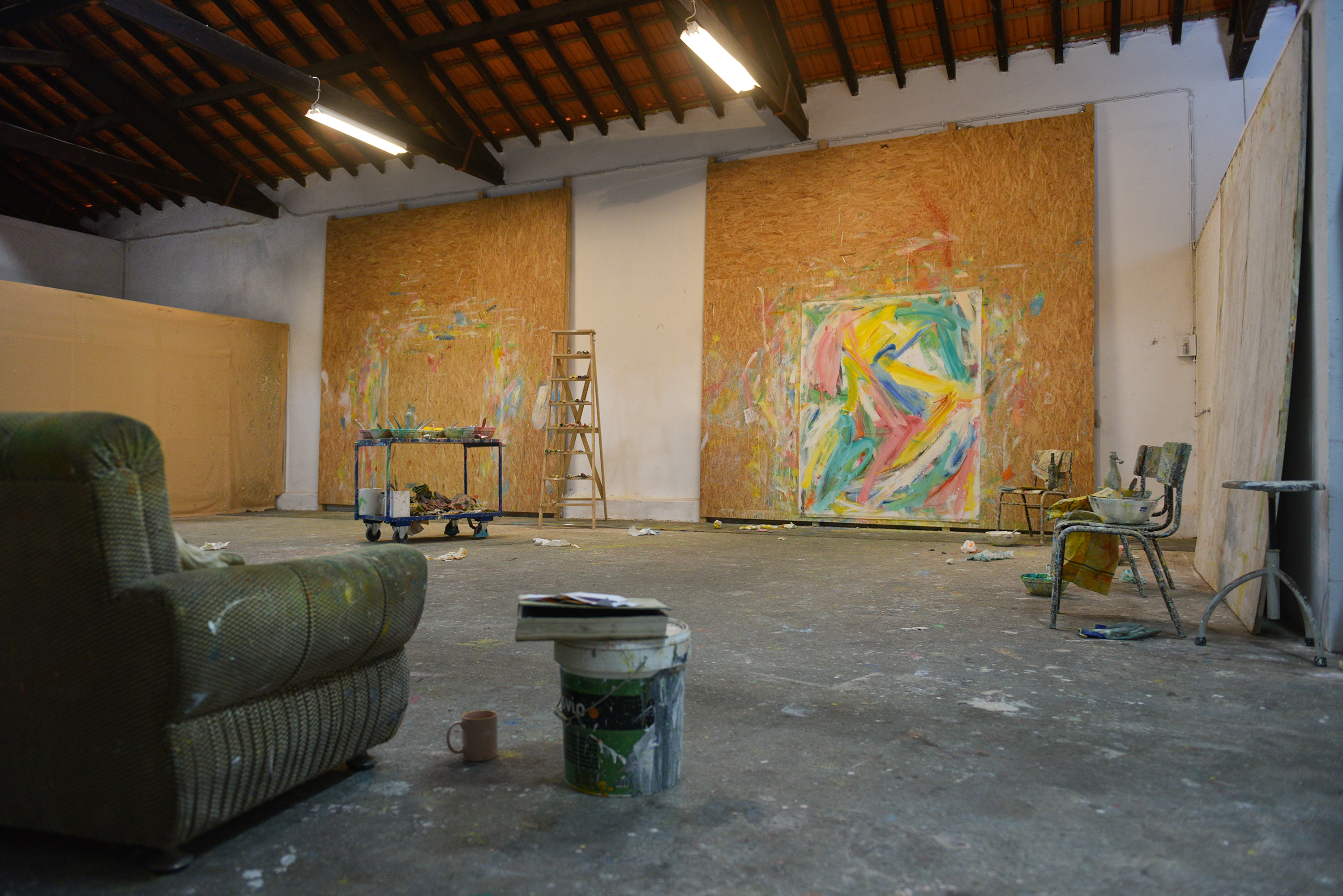
Born in the Netherlands and based in Portugal, Gís Marí [born Gijs Maris in Haarlem, 1991] paints large-scale, abstract, expressionistic oil paintings. He was drawn into the world of painting during his study of psychology in Leiden. His apartment and its white walls increasingly served as an atelier, and instead of preparing for his exams, he was occupied with art. In his early 20s, he quit university to devote his life entirely to painting. Gís Marí rented his first atelier in Amsterdam [NDSM Wharf], where he worked for 2 years. His increasing discomfort with the gentrifying, speedy and money-driven Amsterdam saw him move to southern Europe, where he fell in love with the city of Porto. He rented an abandoned industrial store in central Porto, which served as an atelier and house, and he worked here for four intense years. In 2019, he moved to an old rice warehouse in the port town of Figueira da Foz, where he currently lives and works. In modern times, where quantity and efficiency prevail over quality, Gís Marí believes in old-world values.
You initially studied psychology in Leiden before transitioning to painting. What drew you to become an artist, and how does your background in psychology influence your work?
From early on in life, I had a certain reluctance to unthinkingly accept the things that were taught to me at school. I found myself dreaming, zooming out, and abstracting the knowledge, but I never had a voice to express my inner world. After graduating from high school, when I began studying, I experienced more freedom regarding planning my own time. In Arts, dreaming — once seen as a flaw — became a strength. Studying psychology made me more aware of empathy and its value. For an artist, being empathetic is crucial; art doesn't come solely from oneself. It's valuable to listen to others, whether directly or through books and media, consider their thoughts, and then form your own. Still, I was attending fewer classes. I started buying paint and spent long nights in my student apartment, experimenting with the paint's structure, its interaction with the canvas, and exploring strong shapes and color combinations. This was a world with no one to dictate what to do or think — endless possibilities. Since my early 20s, I have dedicated my life to painting.
What influences your decision to spend months or even years on a painting? Is it the mediums you choose or the motivations behind the work?
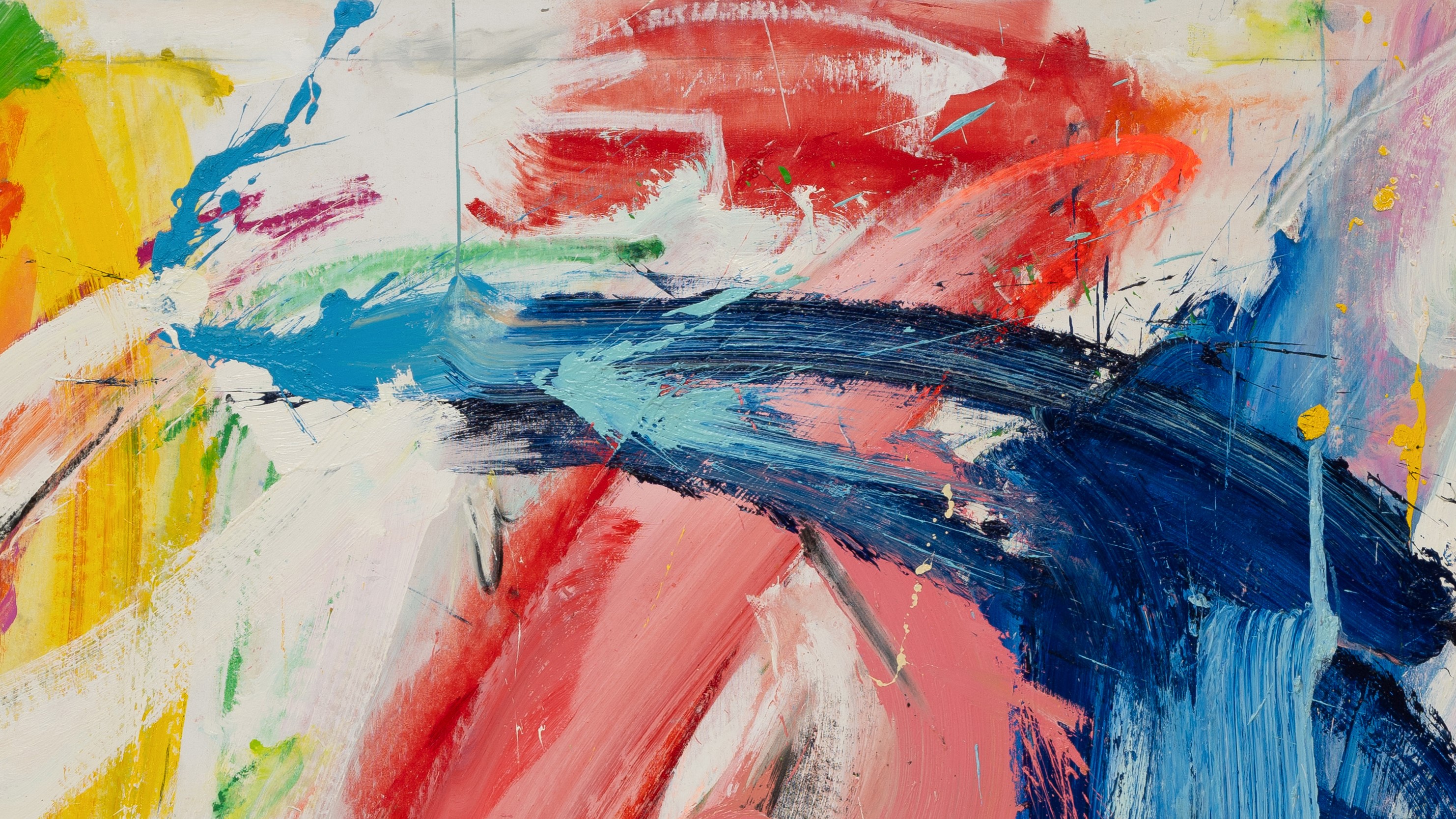
First of all, I am bound by the rules of chemistry. I use oil paint, which is quite thick and not so diluted, so the paint needs some time to dry before being able to apply the next layer. For me, the use of different layers contributes to the profundity and personality of the painting. I like the fact that this process takes time. It allows me to make contact with the painting and develop a relationship. When working on a painting, I am a perfectionist. Every inch of the canvas needs to contribute to the whole. In order to achieve this, I look, paint, erase, and repaint infinitely. This takes a lot of time.
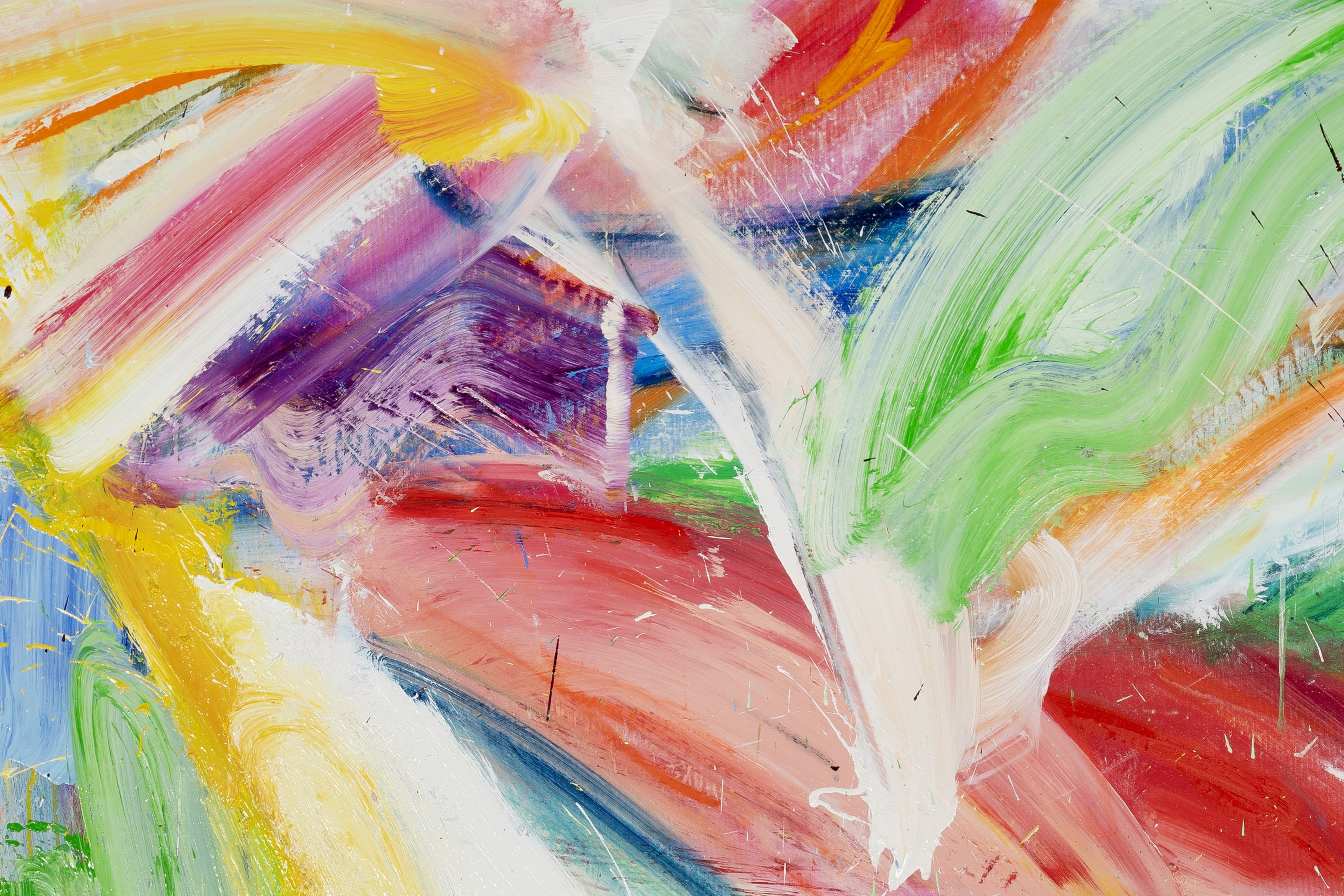
Your art aims to convey energy and evoke deep emotions, much like a messenger traveling between your inner world and the common world. How does this idea influence your creative process?
For me, the essence of art is to stimulate the beholder, in whatever way that may be. If the observer is, after encountering my work, a bit different than what they were before, I am satisfied. In order to produce this stimulation, I put as much energy into my paintings as I can. To generate that energy as an artist, I see myself as a messenger traveling between two worlds: I travel from my own 'inner' world to the 'common' world and back, seeing myself as the character from Greek mythology, Hermes. I pick the flowers from my unique inner world and translate them via a comprehensible medium to the outer world. The longer the journey, the more unique the flower and, therefore, the artwork. This is why I work on a painting for a long period, with high concentration, and often in solitude.
Given the Netherlands' rich artistic heritage, what inspired you to move to a new environment for your artistic practice?
I am extremely grateful to have grown up in the Netherlands. There is so much art to see — from Rembrandt in the Rijksmuseum to De Kooning in the Stedelijk Museum, Van Gogh, Mondrian, and many others. I grew up in Haarlem, a place full of history. The historic Grote Markt square, famously painted by Gerrit Adriaenszoon Berckheyde, was a 5-minute walk from my house, as was the Frans Hals Museum, which for me was the Alex Katz of the 16th century. But alongside my sense of gratitude, I have always felt a certain restlessness. When living in The Netherlands, I switched environments several times a year, moving from anti-squat houses to a boat. The frequent change made me feel alive and lucid. Then, in my early 20s, I moved to Portugal, where I also lived in many different places. I have lived in the same apartment for some years now, but when I don't paint, I am still on the move, discovering new places and people.
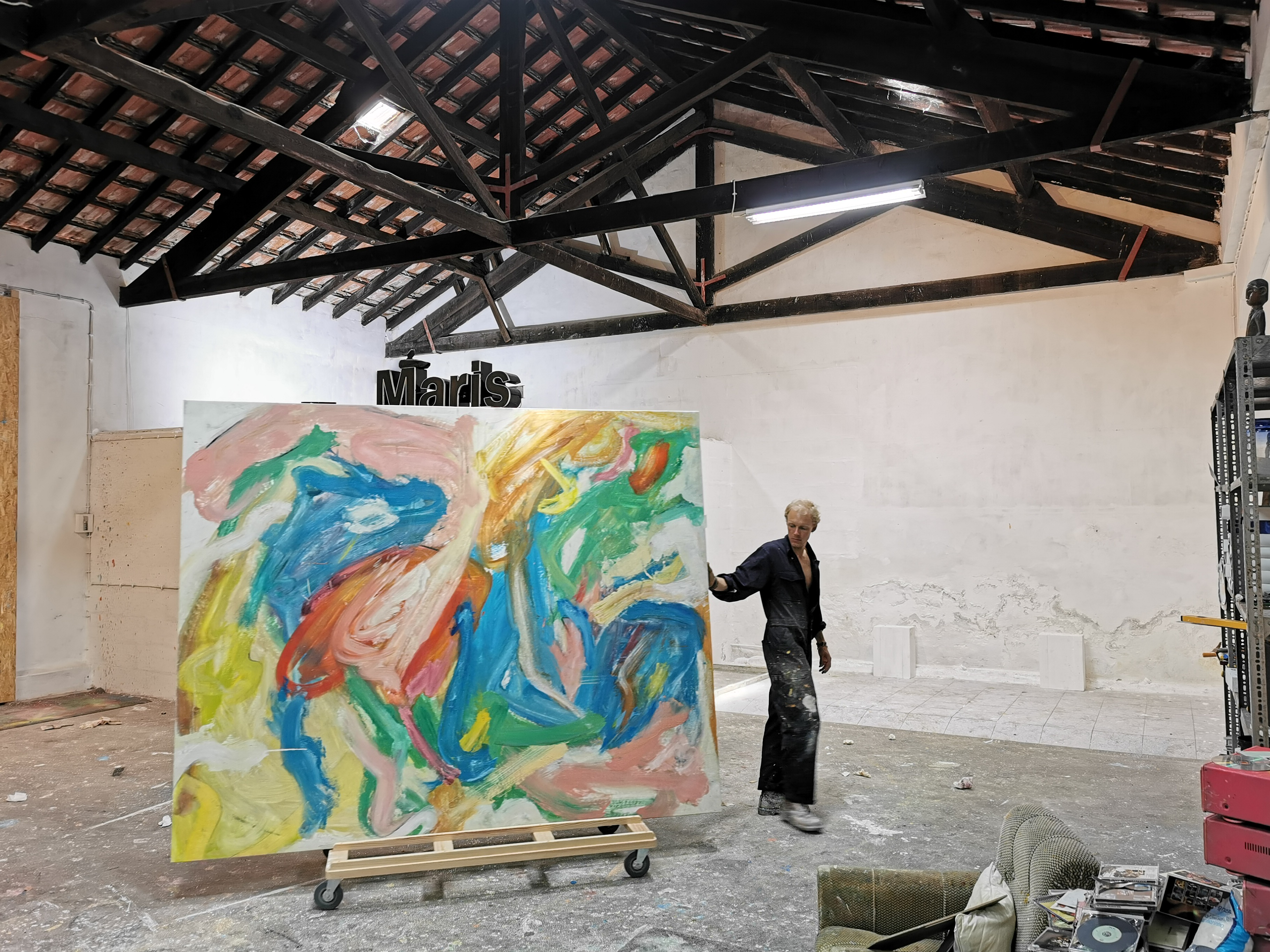
How has working in studios in Amsterdam, Porto, and Figueira da Foz impacted your artistic approach and creative development?
For me, life in the South is more physical and more real. People are less rushed and more respectful towards each other. I think one should not create in a rush; you should oversee and contemplate your work. Also, I like to be an outsider. It feeds my curiosity and drive to explore.
What are your future aspirations for your art? Are there any new themes or techniques you're excited to explore?
At the moment, I am working on an exhibition in an 11th-century chapel. From the moment I saw the space, I was captivated by its ambience and soul. I am currently working on a new series of paintings that respect the personality of the chapel and forge a symbiotic relationship with the space. I have also been experimenting with painting on a somewhat smaller scale lately. Whereas my work is usually around two meters at the minimum, I am now limiting myself to half of this size. The limited surface space makes a single brushstroke more impactful; I need more time to distance myself, observe the painting, and think through the next step.
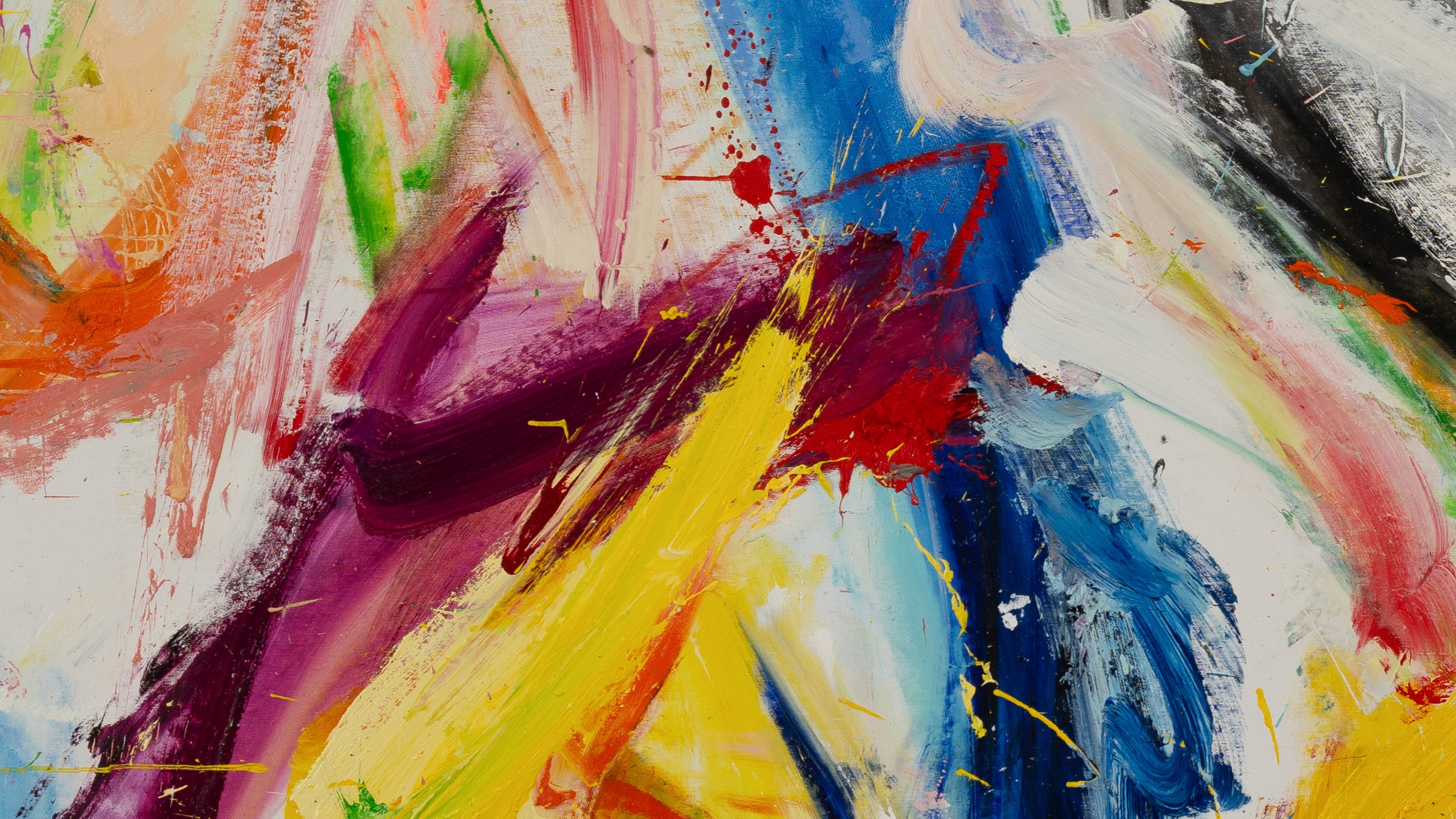
What do you consider to be the most significant achievement or turning point in your artistic journey?
The process of putting my signature on every single painting is significant to me. When working on a painting, especially in its final phase, I am captivated by it. I constantly think of it and dream of it. In the final phase, finishing the painting properly is the most important and significant thing there is. The trajectory of the painter I was 10 years ago to the one I am now has evolved organically and through constant transformation. The struggle, confusion and ecstasy have all contributed to the painter I am now. A year ago, I painted as the painter I was then, and in a year from now, I will paint the way I am then. I don't see my identity as a painter as a fixed point but as a constantly flowing movement, giving all that I can offer at that moment — 'Panta Rhei'.